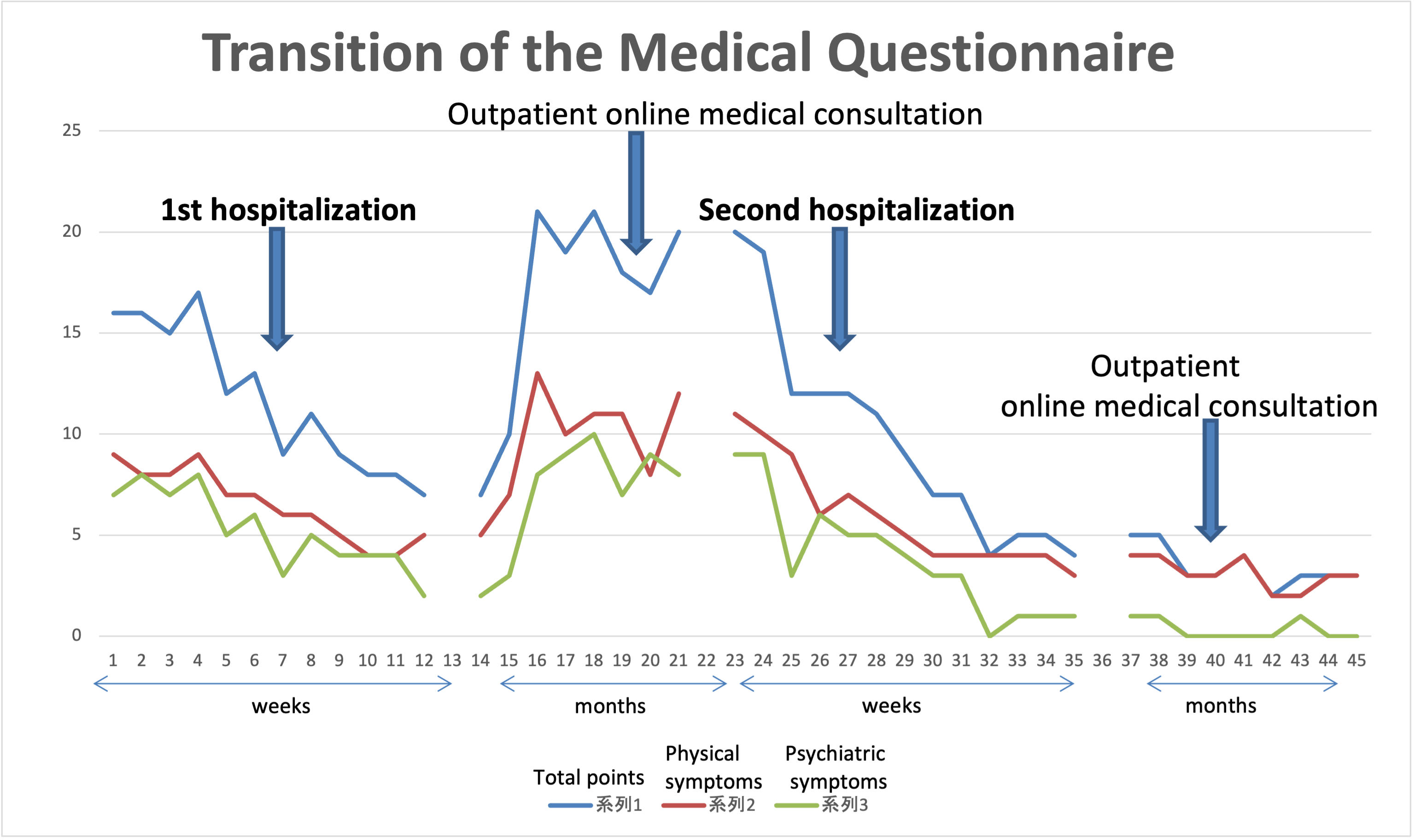
After a motorcycle accident (full body bruises), the patient developed headaches, dizziness, and neck stiffness. He visited a neurosurgeon and an otolaryngologist, but no abnormalities were found. His symptoms subsequently worsened, his hearing also deteriorated, and he was diagnosed with "intractable Meniere's disease." He took numerous medications, but to no avail. He was hospitalized twice at Matsui Hospital and received electrical therapy on his neck, which almost completely cured his headaches, dizziness, and depression, and also restored his hearing.
Case No. 088 44-year-old male
Experience record 2025.09.04
History leading up to hospitalization at Matsui Hospital
I work as a public health nurse.
I have always suffered from lightheadedness and headaches, and looking back, these have been recurring since I was around 20 years old. Around the same time, I was seriously injured in a motorcycle accident. Fortunately, I didn't break any bones and only suffered bruises all over my body, and the orthopedic clinics at the time wouldn't have treated my neck. I thought the headaches and dizziness were completely unrelated to my neck, so I went to neurosurgeons and ear, nose, and throat doctors each time, but they always told me there were no findings or that there was nothing abnormal.
However, when the headaches were severe, I was unable to work, so I suspected I had migraines. I tried several medications, but they were not very effective and were expensive, so I didn't continue for long. That's why I still use Loxonin when I have headaches. I also suffered from pain and stiffness in my neck and shoulders, but I went to a nearby osteopathic clinic and was somehow able to continue working.
However, the COVID-19 pandemic completely changed the situation.
As I worked as a city employee (public health nurse), I felt peer pressure from my workplace to "refrain" from going to the osteopathic clinic. Furthermore, because my workplace was City Hall, which had to respond to the COVID-19 outbreak, I also had to refrain from going to the hospital unless it was absolutely necessary. At the same time, I was assigned to the vaccine response team, and for a long time I was living a life of despair, working from morning until late at night without any days off, looking at a computer and filling out medical questionnaires.
One day, while I was busy like this, I was hit with a severe attack of dizziness in the morning and had a terrible headache, so I was unable to do anything and went to a nearby general hospital.
Although the CT scan showed no obvious findings, I was not fully conscious, so I was immediately hospitalized. My blood data and MRI showed no abnormalities, but I still had dizziness, so I was hospitalized for a few days. It seemed to be good that I kept resting, and my hospital stay was only about a week.
However, the dizziness did not go away after that, so I consulted an ENT doctor at the hospital, who referred me to another ENT doctor who specializes in dizziness. There, the number of oral medications I was taking increased, and my one tablet became two. The number of types of medication I was taking then quickly increased to two types, then three types.
However, I still didn't get better, so we decided to try Chinese herbal medicine next and I was recommended to see a Chinese herbalist. I was determined to get better, so I continued to visit the Chinese herbalist and ENT specialist, and before I knew it, I was taking mountains of medicine with every meal. In the midst of all this, the ENT specialist diagnosed me with "intractable Meniere's disease," and although I knew it would never be cured, I had no choice but to continue taking the medicine.
As time went on, I began to suffer from insomnia, so I went to a psychiatrist. I also had to get treatment for my insomnia, and the number of oral medications I was taking increased. I think I was taking more than 10 different medications at this point.
However, my condition remained unstable, and when it worsened I was admitted to my previous general hospital again.
During my second hospitalization, I was fully conscious, so I researched treatments for "intractable Meniere's disease" and discovered inner ear compression therapy. After I was released from the hospital, I spoke to an ENT specialist, who told me that this had never been done in Yamanashi Prefecture, so I would be the first patient in the prefecture to have this treatment. Still, if it could be cured, I had no choice but to believe in it. I had already maxed out my oral medication, so there was no other treatment available.
Admission to Matsui Hospital
At this point, I could have gone to another prefecture to get a second opinion, but the world was in the midst of the COVID-19 pandemic, and I couldn't travel to another prefecture, so I had no choice but to continue doing what I could at the time.
The "cochlear compression therapy" also had some effect, but it didn't get to the point where I could reduce my oral medication, and I had to continue taking the same large doses of oral medication and the cochlear compression therapy, which meant I was often absent from work. At this point, a hearing test revealed that I had suffered from significant hearing loss along with dizziness.
My boss at work told me, "If you can't do your job, consider quitting," and I became fed up with no one understanding my illness, and with the fact that despite working so hard to deal with my illness, my treatment results were not improving.
I also lost motivation, and eventually there were days when I couldn't get out of bed.
The psychiatrist I see for insomnia treatment said, "I don't think it's depression, but something else, but the only way to cure your current depression is to use an antidepressant," and prescribed me an SNRI (Cymbalta).
One day, while I was wondering, "Do I really have to take this?", I went to a neurosurgeon and he told me, "Your headaches and dizziness may be caused by your neck. However, I don't know how to treat it. Please consider treating your neck." It was the first time I had heard that dizziness can come from the neck. Even though I studied medicine as a public health nurse, I had no idea that such whole-body disorders could be caused by the neck.
From there, I quickly found the Tokyo Neurological Center's website on the Internet and filled out a medical questionnaire, which showed me to be in a severe state, scoring 28 out of a possible 30.
As I hadn't been getting good results with medication, this seemed like a last ray of hope for me. Luckily, I was able to make an appointment with Dr. Hojo at the Tokyo Neurological Center 10 days later. He diagnosed me with severe cervical neuromuscular syndrome and parasympathetic dysfunction, and said that with outpatient treatment three times a week, it would take about a year and a half until I was in remission. If I were admitted to Matsui Hospital, it would take two to three months. I lived in Yamanashi Prefecture, so it was far from Tokyo (2 hours each way) and it was impossible for me to commute to receive treatment. I was worried about being away from home for 2-3 months, but I decided to be admitted to Matsui Hospital in Kagawa Prefecture, as I felt that this was the only way to cure my illness. Perhaps it was good timing, because while other patients were waiting an average of two to three months, I was able to be admitted to Matsui Hospital in Kagawa Prefecture and begin treatment 10 days after my initial consultation at the Tokyo Neurological Center, although I was only able to be admitted to a shared room. The first thing that surprised me when I was admitted to Matsui Hospital was the impression that there were so many people suffering from the same symptoms. The patients at that time had come from all over the country, and when I talked to them while they were feeling well during their hospital stay, they all told me that they had visited various hospitals with similar symptoms and situations, but they couldn't find a clear cause and so they ended up at Tokyo Neurological Center and Matsui Hospital. The first thing I realized was that everyone was grasping at straws and seeking treatment as their last hope.
Dr. Matsui's instructions were that the treatment would consist of physical therapy (Pain Topler and SSP) twice a day, and that the rest of the time they should rest.
To keep my neck at rest, I was told not to watch TV, but listening to the radio was OK, so I subscribed to the smartphone app "Radiko" and spent my time listening to radio stations in Tokyo and Osaka. However, too much rest can weaken my muscles, so when I felt well, I tried to do the bare minimum of exercise to prevent muscle weakness, such as walking up and down the hospital stairs or taking a walk around the clinic area after the outpatient clinic hours in the evening.
My hospital stay was in the middle of the COVID-19 pandemic, so I couldn't even go for walks outside, and I made it a point to bathe in the large public bath three times a week. Taking a long bath refreshed me and motivated me to work hard on my treatment.
At first, the Toplar electrical treatment often made me dizzy and confused, and I often became skeptical, wondering if such treatment would really cure me. However, even then, Dr. Hara and the nurses listened to me carefully, which gave me the motivation to keep trying a little harder.
When increasing the level of electrical therapy, dizziness and unsteadiness inevitably occur as a reaction, and the physical condition may worsen. I learned through experience that this is a temporary healing reaction.
Also, thanks to the encouragement of the therapy staff who told me to "don't give up and keep trying," as well as the encouragement of senior patients, I was able to change my attitude many times, even though I had struggled to improve my Topler and SSP treatment values, and I have gradually begun to feel the effects of the treatment.
Now that I have begun to understand the effectiveness of treatment, I have become the one to convey the importance of not interrupting treatment, just as my senior patients did for me. Looking back, I think that although there are various reasons why patients discontinue treatment and are discharged from the hospital, perhaps this kind of follow-up was lacking.
As the first discharge date approached, I realized that follow-up care would be difficult because I live in a rural area, so I asked Dr. Hara to continue providing follow-up care via online consultations. I was very grateful that an online follow-up system was already in place.
The first hospitalization lasted exactly 90 days, and I felt that I had recovered about 60% of the time, assuming that complete recovery is 100%. My score on the medical questionnaire had dropped from 28 to 11. What surprised me most about my first hospitalization was that my dizziness had almost completely disappeared. To confirm, the day after I was discharged from the hospital, I went to the ENT clinic where I had been diagnosed with Meniere's disease, and the results showed that there was no nystagmus and that my hearing loss had returned to normal. The ENT doctor was so surprised by this that all the staff at the clinic gathered around to hear my story, asking, "Where and what kind of treatment did you receive?".(※Please refer to the image below.)
Second admission
After my first hospitalization, I returned to work, but after about three months, all of my symptoms except for the dizziness and hearing loss returned, so I had to take a second leave of absence. I still remember the question my HR representative asked me at the time: "You were hospitalized and took a long leave of absence, so why aren't you getting better?"
Since there was a period of time before my second admission to Matsui Hospital, I decided to take this opportunity to fix all the issues in my body, so I went to a local orthopedic clinic to have the lower back pain that had been bothering me for a while. I was diagnosed with a herniated disc and spondylolisthesis, and underwent surgery.
Since the lower back is connected to the neck by the spine, I thought there would be no harm to my neck, so after hospitalization for surgery and rehabilitation, I was admitted to Matsui Hospital for the second time. During my second admission, my score had returned to 20 points from 11 points.
Based on my first experience, I gradually increased the level of my SSP and Topler from the beginning of my hospitalization in order to make the most of the 90 days, and after 30 days of hospitalization, I increased the strength to the maximum therapeutic level that could be achieved during my stay, and spent the remaining 60 days there.
When I was discharged for the second time, my score on the medical questionnaire had dropped to 5.
When I was hospitalized for the second time, I enclosed a copy of Dr. Matsui's book, "Cure Your Stiff Neck and 90% of Your Illnesses Will Disappear," along with the doctor's diagnosis and asked the HR person at my workplace to read it so that they could better understand my illness. Perhaps this was worth it, as the HR person had changed from their previous position and they took my workplace placement after I was discharged into consideration.
"Because you've been hired as a public health nurse, you can't be transferred in the middle of the year, but there are various ways of working, so we'll let you know as we go," she said. It also seems that the consideration given to this was significant, as Dr. Hara's medical certificate at the time of her discharge from hospital had included a sentence that said, "Desk work is not desirable," but I think the HR person also understood why desk work is a bad idea after reading Dr. Matsui's book.
Two years have now passed since my second discharge from the hospital. I have been transferred to a job that involves physical activity outside, rather than desk work. My colleagues are understanding of my illness, and I continue to visit by train once every two weeks (Fridays and Saturdays) to a treatment facility in Omiya City, Saitama Prefecture. Even after being discharged for the second time, I have continued to receive online consultations, and once a year I have Dr. Matsui examine me in person at the Tokyo Neurological Center and follow up with me. Perhaps thanks to that, although my health condition still fluctuates, my medical questionnaire score has remained stable at 2 to 3 points.
Now I can drive my beloved motorcycle or car without any difficulty, and I can go out with friends on weekends like I used to, which also helps me relieve stress.
It has now been four years since the cause of my condition was discovered at the Tokyo Neurological Center and treatment began. If I were to compare it to sieging a castle, after four years the outer moat has finally been filled in and I have just reached the entrance to attack the main castle. I have not given up yet and would like to continue treatment.
What I would like to say to those who are about to undergo treatment is to not give up and continue even if the treatment is long-term. Financially, it may be difficult, as much of the treatment and medical care is self-paid. It may also be difficult to find the time. It may also be difficult to gain the understanding of family and workplace. Even with the same treatment, some people improve in a short period of time, while others take a long time to recover.
Therefore, if I were to continue treatment alone, I would give up. I believe that I have been able to continue this far thanks to the support of my colleagues from all over the country who suffer from the same illness that I met during my hospitalization and treatment, as well as the staff at Matsui Hospital and treatment facilities. I believe that I am in good health today because I never gave up and continued with treatment.
To be honest, neck discomfort will not improve just by sleeping or continuing to take medicine. Taking the first step toward electrical treatment, enduring the pain and discomfort and continuing treatment will produce good results.
It's not something that can be cured by cutting and stitching like surgery, so it's important to make an effort yourself. Don't leave it up to the therapist, but learn about your current condition and which part or muscle of your neck is affected, and your consultation with the doctor will become more meaningful.
There are many people out there who suffer from the same illness and are working hard to treat it. If you feel comfortable doing so, interacting with them and getting various information and hearing about their treatment progress can be very effective in motivating you.
Also, Dr. Matsui's method may not be the only way to treat the neck, but don't trust doctors who only prescribe medication without fully understanding the various ailments that can arise from the neck. I am also trying various methods in parallel with Dr. Matsui's treatment. I still don't know which is the right answer.
There is a condition called orthostatic dysreguratio that has almost the same symptoms as patients with cervical neuromuscular syndrome, and there is no established treatment for this condition either, resulting in many young people wasting their time on pointless medication and treatment. However, I have seen many patients who were diagnosed with orthostatic dysreguratio and admitted to Matsui Hospital, and have returned to school and society in good health.
It will be beneficial for them to return to school after their return, and to devote themselves to junior high, high school, university, and club activities, thereby returning to the normal student life.I also believe that in the long run, being able to work enthusiastically, earn money, eventually have a family, and live a life as a member of society will help address Japan's current problems of labor shortages and a declining birthrate and aging population.
I sincerely hope that more people will become aware of this disease and the treatment at Matsui Hospital, and that the national and local governments and workplaces will raise awareness and help develop a treatment.
Changes in Hearing Level
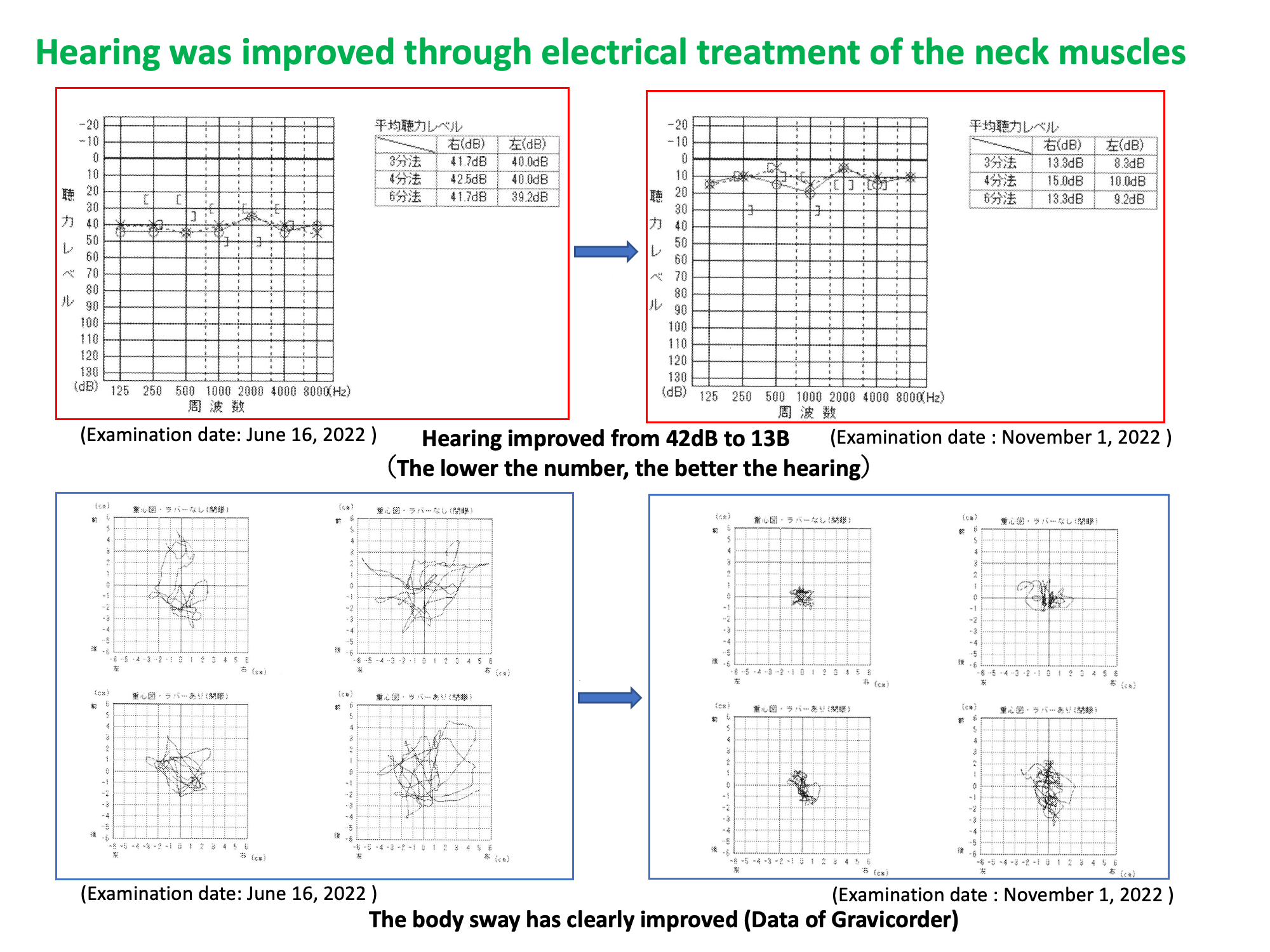
Course of symptoms